
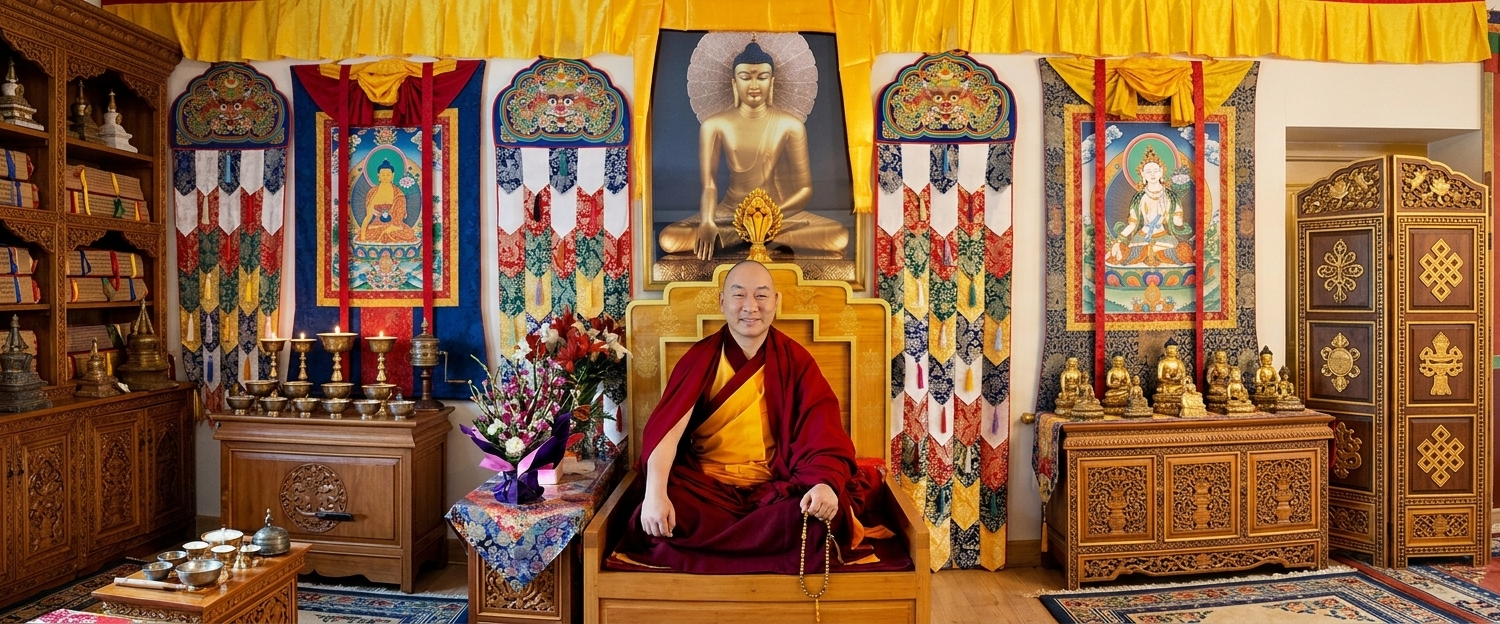
仓忠仁波切
仓忠仁波切,为第十三世仓忠仁波切,法名蒋悲洛桑隆日坚参,又称昂望丹增。他于1970年出生于西藏多堆地区芎波一带、仓忠寺附近的康萨村,自幼即亲近佛法,少年时期便前往拉萨哲蚌寺学习,先后受沙弥戒、比丘戒,系统接受格鲁传承的显密教法教育。
少年至青年时期,仓忠仁波切长期在西藏与印度哲蚌寺洛色林僧院等地闻思修学,循序完成因明、中观、般若、阿毗达摩、律学等五部大论课程,并继续深入密续学习。他在格鲁派最高等级的学修体系中成绩优异,于2004年以优异成绩获得拉然巴格西学位,之后又进入密学院继续深造与教授弟子。他在僧团中以严谨学风、扎实辩经与兼具学修的风范而受到赞誉。
除学院式佛学训练外,仓忠仁波切亦承接上师传承,重视闻思与实修并行。书中提到,他依止多位善知识学习,所受灌顶、口传与教授甚丰,并曾在寺院、辩经学院等处承担教学工作。其学风重视从基础教理入手,强调通过《摄类学》《心类学》《四部宗义》等次第学习,帮助初学者建立清晰、准确而可实践的佛法知见。
在弘法方向上,仓忠仁波切尤其致力于中文佛法教学。他于2008年至2011年赴台湾学习华语,并开始面向华语学人教授佛法;自2012年起常驻台湾,以中文开展现场授课与网络教学。公开网站也显示,他长期提供中文课程资料、教材与影音内容,内容涵盖《入菩萨行论》《心类学》《四部宗义》《道次第》等,形成较完整的中文学习体系。
仓忠仁波切自2015年起赴澳洲学习英文并继续弘扬佛法,同时持续对台湾与大陆学人进行网络教学,并固定回台湾传法。其公开课程页面显示,至近年仍持续在澳洲与台湾时区之间安排线上授课,教授《入菩萨行论》《广八事七十义》等课程,延续其跨地区、长期性的弘法事业。
作为一位兼具传统僧院训练、显密教证次第与现代华语弘法能力的上师,仓忠仁波切的教学特色,在于以严谨的佛学基础引导学人进入修行实践,特别重视初学者的理解与次第建立。他不仅重视教理辨析,也强调将佛法落实于调伏内心、观察烦恼、建立正见与发心修学之中。其著作与课程多以清晰、系统、便于学习著称,长期服务于华语佛法学习者。
Changkhyung Rinpoche, the Thirteenth Changkhyung Rinpoche, bears the Dharma name Jampé Losang Lungtok Gyaltsen and is also known as Ngawang Tenzin. He was born in 1970 in Kangsa Village, near Changkhyung Monastery, in the Xungpo region of Tödui, Tibet. From early childhood, he displayed a deep karmic connection with the Buddhadharma and a natural inclination toward spiritual training.
In his youth, Rinpoche entered Drepung Monastery in Lhasa, one of the great monastic seats of the Gelug tradition, where he received the novice and full monastic ordinations and embarked upon a thorough course of study in both sutra and tantra. Thereafter, he continued his training for many years in Tibet and India, including at Drepung Loseling Monastic College, engaging diligently in study, contemplation, and practice according to the graduated scholastic system of the Gelug lineage.
Following the traditional course of higher Buddhist education, Rinpoche completed extensive study of the Five Great Treatises—Buddhist logic, Madhyamaka, Prajñāpāramitā, Abhidharma, and Vinaya—and pursued further training in the tantric sciences. Owing to his exceptional diligence and scholarly accomplishment, he was awarded the distinguished Lharampa Geshe degree in 2004, the highest academic degree within the Gelug monastic tradition. He subsequently entered the Tantric College for advanced study and also undertook the responsibility of teaching disciples. Within the monastic community, he came to be widely respected for the purity of his discipline, the rigor of his scholarship, the strength of his dialectical training, and the harmonious union of learning and practice that his life exemplifies.
In addition to formal scholastic education, Changkhyung Rinpoche received extensive transmissions, empowerments, oral instructions, and pith teachings from many eminent spiritual masters. He has consistently upheld the traditional principle that authentic realization must be grounded in the integrated cultivation of hearing, reflection, and meditation. His approach to teaching reflects this lineage-based understanding: beginning from foundational subjects and leading students step by step toward firm understanding and genuine practice. In particular, he has placed strong emphasis on the study of foundational texts such as Collected Topics, Mind and Awareness, and The Four Systems of Tenets, thereby helping students establish a clear, precise, and reliable basis for entering the path of Buddhist philosophy and contemplative training.
Out of great compassion and skillful means, Changkhyung Rinpoche has devoted himself especially to the transmission of the Buddhadharma to the Chinese-speaking world. From 2008 to 2011, he resided in Taiwan to study Mandarin and began teaching in Chinese. Since 2012, he has continued to offer Dharma instruction to Chinese-speaking students through both in-person and online teachings. Over the years, he has developed a substantial body of Chinese-language teaching materials, including written texts, course outlines, and audio-visual resources, covering important subjects such as The Way of the Bodhisattva, Mind and Awareness, The Four Systems of Tenets, and the graduated stages of the path (Lamrim). Through these efforts, he has provided a systematic and enduring framework for the study and practice of Buddhadharma among Chinese-speaking students.
Since 2015, Rinpoche has also spent time in Australia studying English while continuing his activities of teaching and guiding disciples. At the same time, he has remained steadfast in offering online instruction to students in Taiwan and mainland China, while regularly returning to Taiwan to bestow teachings in person. In recent years, he has continued to teach across regions and time zones, including courses on The Way of the Bodhisattva and The Seventy Topics of the Ornament of Clear Realization, thereby sustaining a broad and continuous Dharma activity that benefits students in multiple countries.
Changkhyung Rinpoche is especially revered as a spiritual teacher who unites the strengths of traditional monastic discipline, systematic scholastic training, authentic lineage transmission, and contemporary pedagogical clarity. His teaching is marked by precision, structure, and depth, yet is always directed toward the actual transformation of the mind. He emphasizes not only the need to understand doctrine correctly, but also the necessity of applying the Dharma to one’s own experience through taming afflictions, cultivating right view, generating bodhicitta, and progressing gradually on the path to awakening.
Clear in presentation, profound in content, and compassionate in intent, Changkhyung Rinpoche’s teachings and writings have long served as a precious support for Chinese-speaking students of the Buddhadharma. Through his sustained efforts in education, translation, teaching, and spiritual guidance, he continues to uphold and transmit the authentic Gelug tradition for the benefit of present and future generations.